A community of builders sharing real projects — real photos, real parts lists, real costs. Start with seven of my own field-tested builds, then add yours. Upload your build. Inspire someone.
Nine field-tested builds — every part bought on my own dime, installed with my own hands. Tap any build to expand it: full photos, step-by-step, and the exact gear. Scroll down to add your own.
Living in Truckee means owning a lot of skis — and having nowhere to put them. The garage already had two vehicles, a golf simulator, a full workbench, snowblowers, and overhead storage racks. Floor space was out of the question. The solution: mount horizontal ski racks directly to the ceiling above the garage door tracks, high enough that both doors still open and close without touching a single ski. Fourteen-plus pairs of Völkl skis now hang overhead, organized and out of the way, and every square foot of floor stays usable.


Three stages from dead ceiling space to a full quiver stored overhead — without losing a single inch of floor.
Before drilling a single hole, you need to know exactly how much space the garage doors eat when they roll up on the tracks. Open both doors fully, mark where the top of the door sits, then add a couple inches of clearance above that. The ski racks need to mount above this line so the doors travel freely. In a standard residential garage with 7-foot doors, you typically get 18 to 24 inches of usable ceiling space above the door tracks — more than enough for skis to hang flat.
The racks mount directly into the ceiling joists — not drywall anchors, not toggle bolts. Find the joists, pre-drill, and lag-bolt the rack brackets home. The horizontal bars space out to cradle each pair of skis with bindings attached, tips up, tails down. Two rack sections span the width above both garage doors, giving enough slots for the entire quiver. Heavy-duty steel construction handles the weight without flex.


With all the skis loaded, cycle both garage doors open and closed a few times to confirm nothing catches, rubs, or interferes. The doors should travel their full arc without touching a single tail or binding. Once that checks out, organize the quiver — park skis, all-mountain, powder, race stock — so grabbing the right pair on a storm morning takes five seconds. The whole system lives overhead, invisible from the driveway, and the garage floor stays completely open for vehicles, the workbench, and the golf sim.


Common questions about mounting skis above garage doors.
This one nearly broke me. Not because it's hard — the install itself is straightforward if you've done any finish work — but because subfloor prep is the most tedious, soul-crushing phase of any remodel and there's no shortcut through it. Every staple from the old carpet, every high spot, every dip — you deal with all of it before a single board goes down, or the floor tells on you for years. Once the deck was flat and the moisture barrier was rolled, though, the REGALIA wide-plank oak went down fast. DeWalt pneumatic cleat nailer, board by board, racked for random seams, scribed tight into the closets and around every door jamb. Two days of real work, and the room went from bare OSB to a floor that makes the whole house feel like a different place.


Six stages, two days, one pneumatic nailer, and every lesson I learned the hard way so you don't have to.
This is where most DIY floors go wrong, and it's not even close. People get excited, rip the carpet out, and start laying boards on whatever's underneath. Don't be that person. Strip the room to the bare subfloor. Pull every single old staple and carpet nail — yes, every one. Then grab a straightedge and check the whole deck for high spots and dips. Anything more than 3/16" over 10 feet gets sanded down or feathered up with leveling compound. Hardwood telegraphs every bump and hollow. If you skip this, you get a floor that creaks, gaps, and feels like walking on a trampoline. If you skip this, you deserve what's coming.


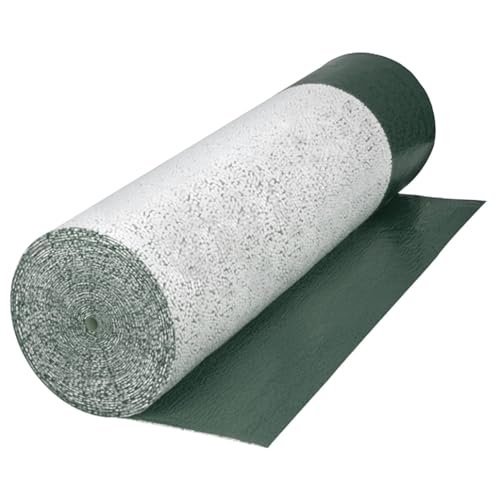
Roll out your underlayment with a built-in moisture barrier over the entire deck, tape every seam. This is not optional. It stops subfloor moisture from migrating up into the boards, and it kills that hollow drumming sound that makes cheap installs sound cheap. While that's down, crack open every box of flooring and let it sit in the room for at least 72 hours. The wood needs to reach the home's own humidity before you nail it. Skip this step and you'll watch your floor cup and gap with the first season change — and you'll be ripping it all out in six months wondering where you went wrong. The REGALIA came in on a pallet with Bostik moisture barrier adhesive. Everything staged, everything acclimating. Patience here saves your whole project.


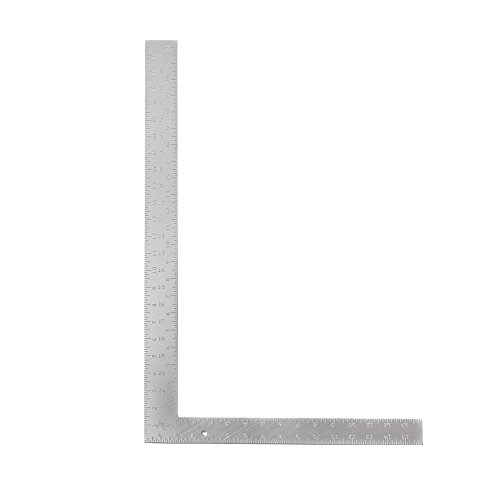
This is where the whole floor lives or dies, and I am not exaggerating. Your walls are not straight. They never are. So you don't set the first row to the wall — you snap a dead-straight chalk line off the longest wall, leave a 3/8" expansion gap at the perimeter with spacers, and set your starter rows to that line. Face-nail the first course (the nailer can't reach it against the wall), then blind-nail the next two courses tight. If those first three rows are straight and locked, the entire field racks fast and stays parallel. If they wander even a quarter inch, the error compounds across the room and you'll see it at the far wall, mocking you.


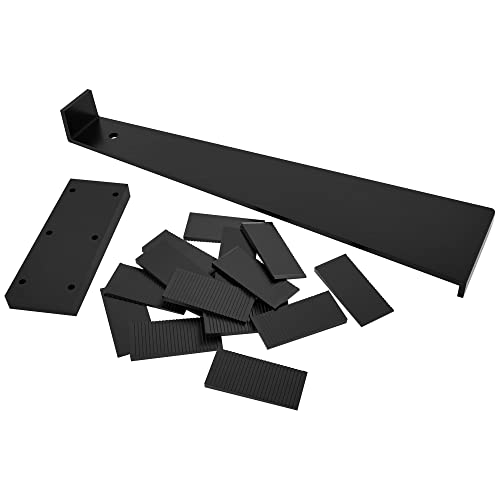
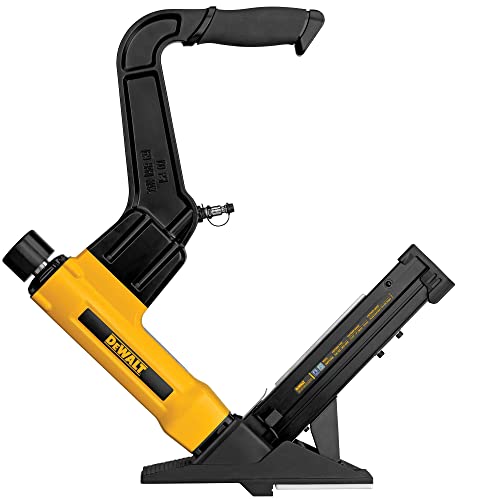
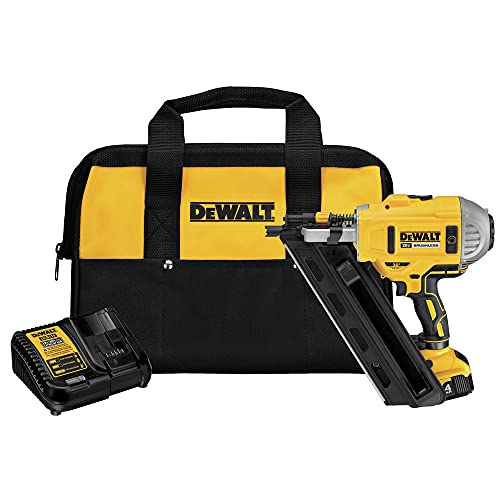
This is the fun part. This is where subfloor prep pays off and you actually start covering ground. With the starter rows locked, the DeWalt DWFP12569 pneumatic cleat nailer takes over and the room starts to transform. Seat each board tongue-to-groove, use the tapping block to close the seam, drop the nailer over the tongue, and hit it with the rubber mallet — one strike, one cleat, perfect angle every time. The next board hides the fastener completely. Stagger your end joints at least 6 inches board to board so no seam lines up with the one next to it. Keep your DeWalt cordless blower handy — blow the sawdust and debris out of every tongue-and-groove joint so nothing telegraphs under the next board. Keep checking you're still parallel to the original chalk line. Once you hit your stride, you can rack 50 square feet an hour. The DeWalt jobsite radio keeps morale up. Mountain views through the windows don't hurt either.


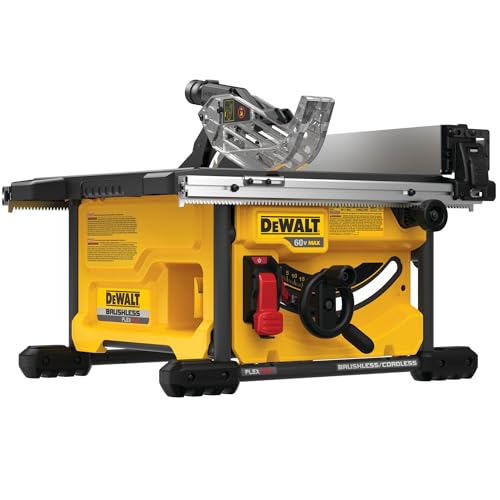
Set up a dedicated cut station in the next room or at the doorway — you are not dragging a miter saw across your freshly laid floor. The DeWalt FlexVolt 12" sliding miter saw handles every crosscut and miter, and the FlexVolt cordless table saw rips boards to width for the last row, closet jambs, and window bays. Both run on 60V batteries, so no extension cords snaking across the install. Closet jambs, window bays, door transitions, floor registers, plumbing penetrations — every one of these needs a scribed or ripped board. Measure twice, cut once, dry-fit before you fasten. The slow rows are the ones nobody notices the trick in, because the trick is tight scribes around every jamb leg and a clean fit around every obstacle. This is where the craftsmanship lives.


The last wall row is where the nailer can't reach and your patience gets tested one more time. Rip the final course to width on the table saw, leaving the 3/8" expansion gap. Pull each board tight with the pull bar and glue-assist where the nailer can't swing — face-nail under the baseboard line so it's hidden. Set transitions at every doorway, run the baseboards to cover the expansion gap, and pin everything with 18-gauge brads. The floor runs from the bedroom through the hallway into the closets, room to room, seamless. When the furniture goes back in and the tools come out, the room reads completely different. Bigger, cleaner, quieter underfoot. Two days of work. This is the payoff.


The questions people actually ask before laying their own floor.
A custom walk-in closet carved out of awkward eave space in the Royal Way primary suite. Framed from scratch, shelving towers built in the shop from cabinet-grade plywood, then set in place and anchored to the studs. Knee-wall framing captures the dead angle under the roofline, full hanging runs and adjustable shelves fill the walls, and motion-sensor LED lighting kicks on when you walk in. Every inch of a throwaway attic corner turned into real storage.


Awkward eave dead space turned into real storage in six stages — with the exact jig, slide, and hardware used at each one.
The whole build started as throwaway eave space behind the primary suite. Before any saw came out, the dead angle under the roofline got measured top to bottom — ceiling slope, knee-wall height, door swing, and every inch of usable depth. A built-in only works if the layout is drawn to the real space, so the hanging runs, shelf towers, and drawer bank all got mapped before a single stud was cut.


Knee-wall framing captures the dead angle under the roofline and squares up the closet opening. A header and upper cubbies get framed across the top for overhead storage, and the side walls get studded out plumb and on layout so the drywall and built-ins land flat. Everything ties back to the existing framing — this is the skeleton the whole closet hangs on.


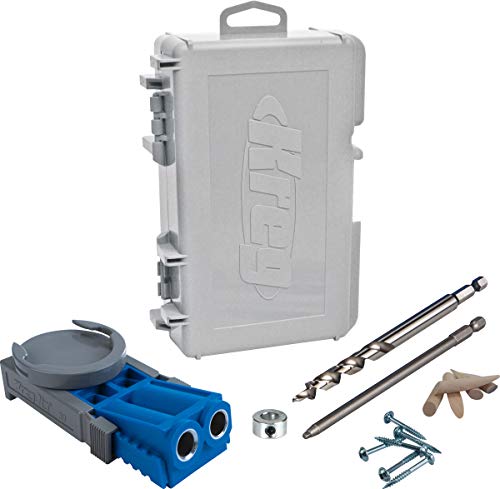
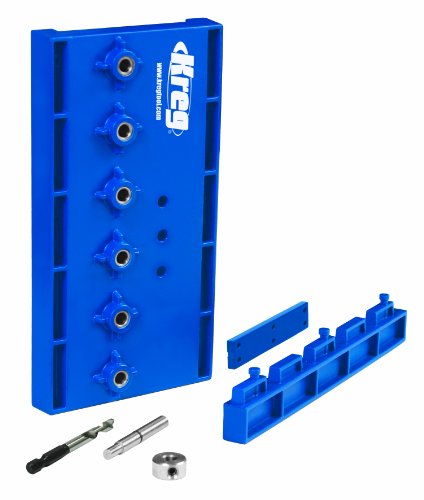
The towers get built in the shop from cabinet-grade plywood — cut to size, then joined with pocket-hole screws and glue for joints that pull dead tight and stay square under load. Fixed dividers and a drawer bay get laid out on the bench, glued up, and clamped until the Titebond sets. Building off-site means precise, repeatable boxes that just get carried in and anchored.


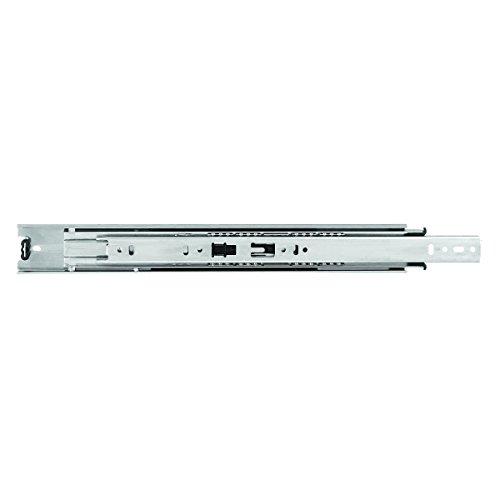
Full-extension ball-bearing slides go on the drawer bay so every drawer pulls all the way out and glides shut soft and quiet. The trick is mounting them dead parallel and at exactly the same height on both sides of the bay — a few thousandths off and the drawer racks or rubs. Cabinet box on one rail, drawer on the other, and they meet on the ball bearings.


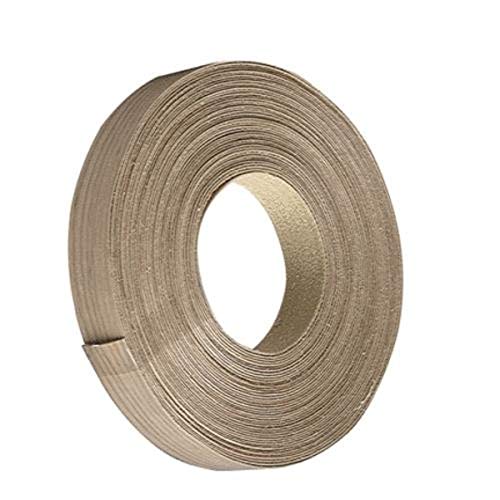
Raw plywood edges get hidden with iron-on veneer edge banding — heat sets the glue, a quick trim and a sanding block leave a clean, solid-looking edge. Then every surface gets sanded smooth with the random-orbit sander, knocking down mill marks and breaking sharp corners so the finish lays down even. This is the step that takes the towers from "shop boxes" to "built-in furniture."


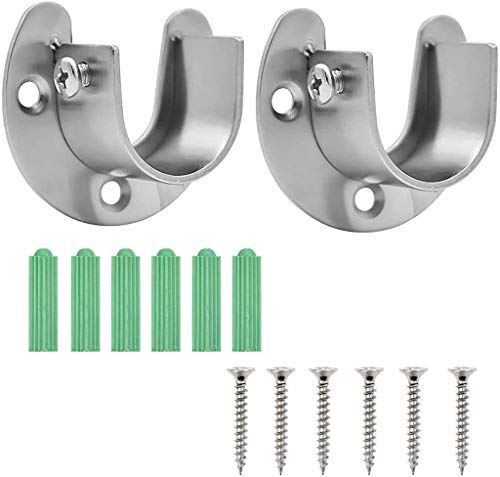
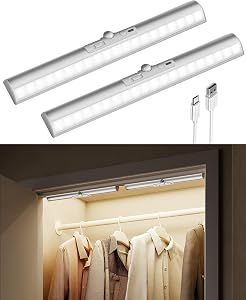
The towers get carried in, leveled, and anchored into the studs, then it's all hardware: a shelf-pin jig drills clean, repeatable rows so shelves are adjustable to any height; closet-rod sockets carry the hanging runs; and a motion-sensor LED bar kicks on the moment you walk in. Every inch of a throwaway attic corner is now real, organized storage.


What people ask before building their own closet cabinetry.
Six days, one CAT 299 compact track loader, twelve tons of Sierra granite. A forgotten residential side yard turned into a permanent boulder retaining feature with drainage grade + cut paths + finished decomposed granite top dress. Get the boulder faces right and the wall looks like it's been there a hundred years. Get it wrong and it looks like a pile of rocks. This one got the faces right.
Five phases from forgotten weeds to permanent boulder feature, with the gear used at each stage.
Strip out the old landscape fabric, pull every weed root, and grade the subbase down to mineral soil with the CAT 299. The grapple bucket rips out overgrown root balls and old edging, then the rake bucket levels the pad to a rough working grade. Dump runs haul out the debris so you’re starting with a clean canvas.
Excavate a drainage swale behind the future boulder wall line and lay 4″ perforated drain pipe bedded in #57 drainage stone, wrapped in filter fabric. Grade the pad so water sheds away from the house foundation at 2% minimum. This is the step that keeps the wall from hydrostatic blowout in a Sierra spring melt.

Twelve tons of Sierra granite delivered on a 16′ dump trailer, staged in the street, then placed one rock at a time with the CAT 299 grapple. Every boulder gets set face-forward, tilted slightly back into the hillside, and bedded into the subgrade at least a third of its height. Stagger the joints so water doesn’t channel between them. Get the faces right and the wall looks like it’s been there a hundred years.
Backfill behind and between the boulders with clean drain rock, then cap with a 4″ lift of compacted class-2 road base. Run a plate compactor over the whole pad in overlapping passes until it stops moving. Check the grade with a laser or string line — you want the surface draining away from the house and toward the swale.

Spread 2–3″ of decomposed granite (DG) over the compacted base, rake it to a smooth walking grade, and mist-compact it. DG packs into a firm, natural-looking surface that drains freely and blends with the Sierra landscape. Edge the perimeter with steel landscape edging so the DG stays put.


Stick-framed 10×12 mono-slope shed tucked between mature pines on a Truckee lot. Cream-painted lap siding, matte-black painted lower wainscot, 6-lite white prehung door, casement window, dark-gray standing-seam metal roof. Built from foundation to weather-tight across a Sierra winter, then dialed in with a landscape grade and granite boulder finish.
Five phases of stick-framing a mono-slope shed in the Sierra, with the lumber, hardware, and tools that went into each one.
Lay out the 10×12 footprint with batter boards and string, level the site, and set concrete deck blocks at 4′ on center both ways. Frame the floor with pressure-treated 2×6 joists at 16″ OC, square it corner to corner, and sheath with 3/4″ tongue-and-groove plywood subfloor. Everything pressure-treated on the bottom because it’s sitting in Sierra dirt.
Frame four walls with 2×4 studs at 16″ OC, with the back wall shorter than the front to create the mono-slope pitch. Double top plates, king studs and jacks at the door and window rough openings, all nailed up on the deck and tilted into place. Sheath with 7/16″ OSB, then wrap with housewrap for the weather barrier.


Run 2×6 rafters from the tall front wall to the short back wall at 16″ OC, sheath with 1/2″ plywood, and roll out synthetic underlayment. Screw down the dark-gray standing-seam metal roofing panels from eave to ridge with color-matched fasteners. Add a drip edge at the eave and rake and you’re weather-tight on top.
Nail up 8″ lap siding working bottom to top, overlapping each course 1-1/4″. Run 1×4 corner boards and window/door trim. The wainscot lower third gets matte-black paint, the upper body gets cream. Caulk every joint and nail hole before the topcoat so water has no way in.

Set the 6-lite white prehung entry door, shim it plumb and square, and foam the gap. Install the Jeld-Wen casement window with flashing tape lapped shingle-style. Inside: add a sheet of pegboard on the back wall for hand tools, build a quick shelf along one side, and run a 20A circuit from the house for a light and an outlet.

Empty two-bay Sierra garage transformed into a full workshop + golf-simulator hybrid across nine months. Husky modular cabinet wall, custom 2×6 workbench with pegboard tool grid, DeWalt ToughSystem stack, ceiling-mounted overhead wire racks sized off the wheelbase so the BMW still parks inside. The garage that earns its square footage twice.
Five phases over nine months of nights and weekends, with the exact cabinets, bench components, and storage used.
Strip the garage down to bare concrete. Patch every crack and oil stain with a concrete patch compound, then degrease the whole slab. If you’re doing epoxy or interlocking tiles later, the slab has to be clean and profiled now. Measure the space wall to wall and plan the cabinet run, bench zone, and vehicle clearance before buying anything.

Assemble the Husky Heavy Duty welded cabinets, level the bases on the slab with shims, and anchor the uppers to the studs. Run them wall to wall on the back side of the garage — base cabinets, tall lockers on the ends, and wall cabinets above. The modular system means you can rearrange later if the shop layout changes.


Frame a 2×6 workbench along the side wall — 36″ height, 24″ depth, butcher-block or 3/4″ plywood top. Lag the back rail into the studs so it’s rigid enough to hammer on. Mount a 4×8 sheet of pegboard above the bench with 1″ standoffs, then hang every hand tool on hooks so you can see everything at a glance.


Mount 4′×8′ ceiling-mounted wire racks on threaded rod from the joists, sized so they clear the car roof by 6″ when it’s parked below. Two racks, staggered off the centerline so the garage door track has room. Seasonal gear, holiday bins, and cases go up top and out of the workspace.


Swap the single 60W bulb for 4′ LED shop lights daisy-chained across the ceiling — 5000K daylight, 10,000 lumens each. Add a DeWalt ToughSystem tower for the cordless tool packs, mount a power strip along the bench, and run a dedicated 20A circuit for the miter saw. The BMW still parks inside.


V1 + V2 — two builds on one page · garage to pro room · 26-sec hero video. Opens with a 26-second cinematic showing the iPhone AI motion capture (Onform) → AirPlay to Apple TV side monitor → Garmin R10 launch monitor → annotated swing → V2 reveal. V1 (Dec 2022): Net Return enclosure + Garmin R10 + tripod projector, built in a single afternoon, $1.8K all-in. V2 (Mar-May 2024): permanent built-out room with ceiling-mount projector, wall-anchored impact screen, full green carpet, dual TVs, club rack — same garage bay, fully committed. R10 carried over. Real photos throughout, no AI artwork. Switch tabs at the top of the page to pick a build.
V1 was a one-afternoon $1,800 net setup. V2 was a 10-week permanent build-out. Both use the same Garmin R10.
V1 was proof of concept. Set up The Net Return Pro Multi-Sport net in the garage bay, hung a white bedsheet as a temporary screen, and tripod-mounted a cheap projector aimed at the sheet. Garmin R10 launch monitor on the floor behind the ball. E6 Connect app on the laptop. Playable that same afternoon for under $1,800. Convinced me V2 was worth doing.


V2 started by framing a permanent enclosure in the back third of the garage bay with 2×4 walls and a header. The Carl’s Place impact screen mounts to the header with bungee cords so it hangs flat and absorbs full-swing shots without bouncing back. The frame is anchored to the slab and ceiling joists so nothing moves.
Mount the projector upside-down on a ceiling bracket behind the hitting position, aimed at the impact screen. Run HDMI through the ceiling cavity to the laptop/Apple TV station at the side. Roll out the hitting mat and approach turf wall to wall — the full green carpet treatment so the ball sits and rolls naturally.


Mount a 50″ TV on the side wall for the Apple TV — swing replay via AirPlay from the iPhone running Onform motion capture. A second smaller monitor shows the R10 data dashboard. Build a wall-mounted club rack from 2×4s and 3″ PVC saddles so the bag doesn’t eat floor space.

Run LED strip lights along the ceiling perimeter on a dimmer — ambient lighting that doesn’t wash out the projector. Add a Bluetooth soundbar for course audio. Hang acoustic foam panels on the walls behind the hitting position to deaden the impact sound. The result is a dedicated sim room that still lets you park the car in the other bay.


From Amazon order to running heat in the tool truck. Wiring harness, mounting bracket, exhaust routing through the floor pan, fuel tank sourcing, ducting routing to the cab, thermostat tuning. Affiliate-linked parts list. Honest cost breakdown. The punch list of what I'd change next time.
Six steps from an unboxed Chinese diesel heater kit to warm cab heat in the tool truck. Every part, every wire, every lesson.
Pick a mounting location under the truck bed or inside a toolbox bay where the exhaust can route straight down without hitting anything. The heater unit mounts on a steel plate with vibration isolators — drill the mounting holes, bolt it down, and make sure it’s level so the fuel pump gravity-feeds correctly. Keep the unit accessible for maintenance.

Route the stainless exhaust pipe down through the truck floor pan or out the side of the bed box. Cut the hole with a hole saw, drop the exhaust through, clamp it tight with band clamps, and aim the exit away from the cab and any fuel lines. Seal the floor penetration with high-temp silicone. The exhaust must terminate in open air — no exceptions.

Mount a separate 2.5-gallon diesel fuel tank in the bed (don’t tap the main truck tank — lesson learned). Run 4mm fuel line from the tank to the fuel pump and from the pump to the heater. The fuel pump has a specific orientation — mount it below the tank and above the heater so it pulls downhill. Secure every line with P-clamps and check for kinks.

Run 60mm or 75mm aluminum flex duct from the heater outlet up through the floor or firewall and into the cab. Add an inline Y-splitter if you want dual vents. Use vent grilles at the cab outlet so you can direct and shut off airflow. Insulate any ducting that runs through unheated space so you don’t lose BTUs before the air hits the cab.

Run the wiring harness from the heater to the cab. Connect the fuel pump, glow plug, blower motor, and temperature sensor per the wiring diagram. Mount the digital controller inside the cab within arm’s reach of the driver’s seat. Wire to a dedicated circuit with an inline fuse — 30A for the 8KW unit. A relay off the ignition switch is optional but smart.

Prime the fuel pump, fire the heater on low, and watch the exhaust for white smoke (normal on first start as the manufacturing oils burn off). Run it through its full heat range and listen for the fuel pump clicking rhythm — uneven clicks mean air in the line. After two Sierra winters and ~600 jobsite hours: the dedicated fuel tank was the best call. Tapping the main tank caused air locks. Carry a spare glow plug.

Bluetooth audio that survives the jobsite. Pelican 1600 case, Alpine SPR-60C component speakers, Rockford Fosgate Prime amp, sealed AGM battery in a custom welded steel cradle. Real sound. Built tough. Ready for trucks, UTVs, snow grooms, and off-grid camps.
Seven steps from an empty Pelican 1600 to a bomb-proof Bluetooth speaker that’s been to Truckee, Tahoe, and the Dominican Republic.
Open the Pelican 1600 and plan the layout: speakers on the lid side, amp and battery in the base. Mark the speaker cutouts on the lid interior, the switch and charging port locations on the side wall, and the battery cradle footprint in the base. Dry-fit everything before cutting.

Cut the speaker holes in the lid with a jigsaw using a fine-tooth blade, staying just inside the scribe line. Drop the Alpine component speakers in, gasket them with closed-cell foam tape, and bolt them down with stainless hardware. The woofers get the big holes; the tweeters mount on surface pods near the top.

Mount the Rockford Fosgate Prime amp to a plywood backer board, screw the board to the case base, and run speaker wire from the amp outputs to each driver. Keep the power and speaker runs on opposite sides of the case to minimize noise. Solder every connection and heat-shrink — no crimp connectors in a vibrating rig.


Weld a steel cradle from 1″ angle iron (or buy a small battery box) sized to hold the sealed AGM battery snug in the bottom of the case. Bolt it down so the battery can’t shift when the case gets tossed around. Run 8-gauge power wire from the battery to the amp through an inline fuse. The AGM is sealed and spill-proof — safe inside an enclosed case.

Mount a Bluetooth audio receiver module in the case and wire its RCA outputs to the amp inputs. Add a 3.5mm aux input jack on the side wall as a backup. The Bluetooth module runs off the same 12V battery through a small buck converter to 5V.


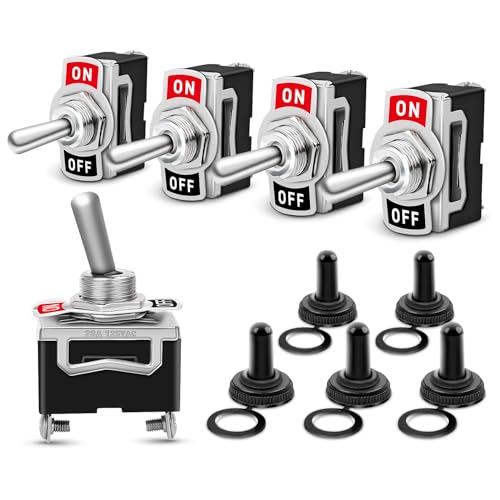
Mount a weatherproof toggle switch on the case side wall for master power, and a panel-mount SAE charging port so you can top off the battery without opening the case. Wire the toggle inline between the battery and the amp so one switch kills everything.


Button everything up, run a full test at max volume to check for rattles, and take it to the jobsite. After three years of field use across Truckee, Tahoe, and the Dominican Republic: the Pelican case is bombproof, the Alpine speakers are crystal clear at full volume, and the AGM battery runs 8+ hours on a charge. The only upgrade I’d make next time is lithium for lighter weight.
Single-axle enclosed cargo trailer wired with dual-voltage 12V house + 110V shore power, 8-channel lit marine switch panel, LED strip lighting, and DeWalt jobsite saws on dedicated platforms aimed straight out the open ramp door. Documented step-by-step across nine build phases, with full electrical schematic and a complete materials list. Eight years on the road and counting.
Nine build phases from an empty enclosed trailer to a dual-voltage wired mobile shop with DeWalt saws on deck.
Pull everything out of the trailer, degrease the floor, and fix any rust or damage. Measure the interior wall to wall, floor to ceiling, and plan your electrical runs, saw platforms, and storage zones before drilling a single hole. Tape out the saw positions on the floor and mock up the switch panel location at the entry door.
Run 10-gauge stranded wire for the 12V house system from the battery box at the tongue back through the walls to each light and switch location. Mount a deep-cycle marine battery in a vented battery box at the tongue. Every run gets labeled at both ends with wire markers. Pull more wire than you think you need.


Mount a 30A power inlet on the exterior wall, run 10/3 Romex to a small breaker panel inside, and wire 4 NEMA 5-20 duplex outlets along the walls. The miter saw, table saw, compressor, and chargers all run off shore power when you’re plugged in at a site with a 30A receptacle.


Mount an 8-gang marine-grade rocker switch panel at the entry door, lit with individual LED indicators. Each switch controls a zone: overhead lights, work lights, exterior flood, charging outlets, exhaust fan, and spares. Run LED strip lights along the ceiling and under the shelves, all on the 12V house system.

Build dedicated platforms for the miter saw and table saw aimed out the open ramp door. Frame the platforms with 2×4s, top with 3/4″ plywood, and bolt them to the trailer floor at the right height so the saw decks are ergonomic standing at the ramp. Infeed and outfeed support arms fold up for travel.


Build vertical lumber racks along one wall for stock material, shelf brackets for tool cases, and a pegboard section for hand tools. Add bungee cord tie-downs across the shelves so nothing shifts in transit. A DeWalt ToughSystem wall mount keeps the drill/driver kits, impact, and circular saw at arm’s reach.
Builders from across the country sharing their projects — real builds, real photos, real people. Be one of the first to submit yours.
Built something? Share it with the community. List your parts, tell the story, attach a few photos. Real builds. Real photos. Real people. The best ones get featured on this page with full credit.
Submissions come straight to Errol. No selling, no fluff — just real work. By submitting you're OK with your build being featured on errolkerr.com with credit.
Every build page, photo edit, video render, and transcript on this site comes off a 100% free toolchain. No subscriptions, no paid plans. The same six tools used here are what most one-person shops actually need — listed plain so other Truckee makers can pick them up the same week.
The same NLE Hollywood uses for color and audio. Free tier is full-featured — multicam, Fusion VFX, Fairlight audio, the works. Replaces Premiere + After Effects.
davinciresolve.com →OpenAI Whisper running locally on the Mac. Drag in any audio or video file, get a transcript in minutes. Free, offline, no upload, no usage cap. Perfect for build-video narration scripts.
MacWhisper →Royalty-free music + sound effects. No attribution required for most tracks, no demonetization on YouTube. Lots of cinematic and jobsite-appropriate beds.
pixabay.com/music →Microsoft's free DALL-E 3 frontend. 15 boost credits per day, then slower-queue free. Used here for cinematic build banners + hero artwork when the real photo doesn't exist yet.
bing.com/images/create →Free daily credits for AI-generated video. Image-to-video and text-to-video both supported. Good for cinematic 5-second intros + B-roll fillers when the real footage isn't there yet.
klingai.com →The Swiss Army knife of video. Resize, convert, splice, watermark, extract audio, batch-encode — all from the terminal. Install once with brew install ffmpeg and never need anything else.
The principle. Spend $0 on the toolchain, spend the money on the tools that build the actual thing — the welder, the saw, the camera, the lights. Software has gotten free; hardware has not. Optimize accordingly.
New builds in the queue. Drop alerts go out on Instagram and YouTube when each goes live.
Custom single-axle pipe trailer from raw steel. Welded frame, pipe bunks, ratchet tie-down points. Built to haul 4-inch and 6-inch pipe to Sierra jobsites.
Full breakdown of the Palisades snow removal equipment package. CAT 299, snow pushers, de-icing, and the battery charging rotation that keeps everything running at 4 AM.
Got a build worth sharing? Submit yours and the best ones get featured here with full credit and a link to your channel.
Submit a build →Send me your DIY work — diesel heaters, welding rigs, jobsite hacks, drainage tricks, anything mechanical or electrical you've cobbled together that worked. Best ones get featured with credit. No selling, no fluff. Just real work.
errolkerr.com/diy documents 12 real DIY build projects by Errol Kerr in Truckee, California — from a diesel heater install and Pelican boom box to a welding cart, tool truck setup, garage golf simulator, and battery charging station. Every project includes parts lists, photos, and step-by-step documentation from real builds in the Sierra Nevada. These are practical mountain-life projects tested at 5,820 ft elevation. Also browse the 195+ field-tested tools used across these builds.